by Jason R Owens | Apr 12, 2020 | Uncategorized
I have started my search for both a doctoral committee chair and one committee member this week. I imagine this will be about an 8 week process. I have found several viable candidates in the university’s roster. I reached out to my network this week in an effort to gain a few personal introductions. I did receive a few, and I will pursue shortly.
I am really hoping to find a person who is well grounded in phenomenological studies as this is my intended method for studying my research problem. The university appears to have several good candidates, and I intend to contact them by mid-week next week.
by Jason R Owens | Apr 11, 2020 | Uncategorized
[column width=”25″]I headed into this class with little expectation of being engaged in the material, but left the class really enthused.[/column]
[column width=”25″]We were charged with a deep exploration of ethics as it applied to corporate governance. Now that I can see the larger picture, it is completely understandable why the pursuit of ethics is so important and so widely discussed.[/column]
[column width=”50″ last=”last”]I have written more in this class than in any other. I reached a new summit in what I can accomplish through diligent pursuit and good use of time management. I can also say that the depth of my research grew to a new level in this class as well. The only bad part about the class is that 30% of our grade hung in the balance in the last week. It is clearly a make-or-break proposition on the last assignment. I love the pressure.[/column]
![A Gradual Start Leads to Strong Results [Interview with Abigail Young]](data:image/svg+xml;base64,PHN2ZyB3aWR0aD0iMSIgaGVpZ2h0PSIxIiB4bWxucz0iaHR0cDovL3d3dy53My5vcmcvMjAwMC9zdmciPjwvc3ZnPg==)
by Jason R Owens | Apr 9, 2020 | Self-Employed Sweet Spot
Starting a Business Slowly
A few months ago my daughter was in full birthday campaign mode.
At the dinner table, “I want a Barbie cake!”
During family movie night, “I want a Barbie cake!”
On the way home from school, “I want a Barbie cake!”
You get the picture.
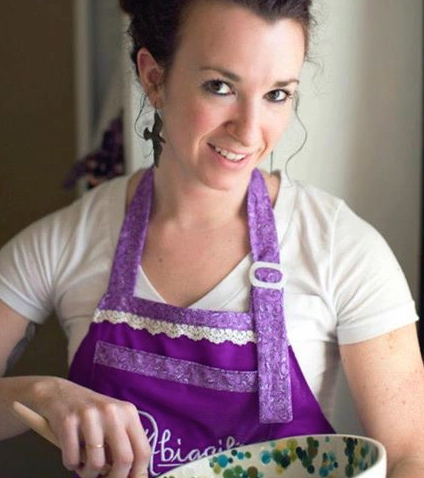
I’m sitting across the table from one of my clients and shared my cake drama with him. “You need to go see Abigail. She’s awesome!” Fast forward 4 months. We did get the cake from Abigail. It was awesome. It was one of those creations that looked almost too good to eat. Now I’m sitting across the table from Abigail talking with her about how she got started in her cake baking business.
“It was really slow at first”
Abigail attended pastry school at a community college and tried her hand at working in the baking business. “I landed an internship with a lady in Chicago for a while, and I really thought I was going to stay up there long term.” That arrangement turned out to be short-lived, and Abigail returned to North Carolina. She took a job with a freight broker to pay the bills. That was 3 years ago. Now Abigail has her own space where she pursues her baking passion as Abagail’s – A Cake Affair.
“It is still a bit of a shock to me. ‘Am I really getting to do this full-time?'”

Abigail Young – A Cake Affair
Her path from the freight broker to the commercial kitchen was a slow and steady one, which is a good model for people who need to learn a business. When she started 3 years ago, she did birthday cakes, mainly, and then received orders for a few wedding cakes here and there. Her first year was modest, yet encouraging. On occasion she would bake cupcakes and take them around to local merchants to drum up word of mouth. It must have worked. Business grew steadily in her second year, and word spread about the quality of her work. In year 3 things got even busier.
“I finally got to a point this past January where I said, ‘I am taking the whole month off from baking!’ Then my little niece came to me asking for a Spider Man cake for her birthday. What are you going to say? I think my break lasted about 2 weeks.”
By the time March rolled around this year Abigail said that business lit up like nothing she had ever seen. Things picked up to a point where she was doing several cakes a week for weddings, birthdays and special occasions.
“By the beginning of June I had done as much business as I did in all of last year.”
I asked her where she found such success. “The only advertising that I do is word of mouth and Facebook.” Makes sense. I was referred to her by one of my business colleagues. Abigail brought up a good point. There is something magical about sharing pictures on Facebook. Her secret? One photo at a time. Don’t share pictures in groups. When people see a picture of a cake that looks good, or a cupcake that is too tantalizing, people want to share, and Facebook makes it so easy.
I asked Abigail how she handled the emotional roller coaster that often comes with starting a business.
“If things get hard I find that going out to run an errand really helps. I definitely need to get out of the house. And there’s always the gym…”
These mental breaks provide a bit of a reboot that allows Abigail to get her mind back into a good headspace.
A few days after I interviewed her I stopped in to see her new space. She had just moved in and was still getting accustomed to the feel. It is so good to see a business with a strong foundation that is poised for growth.
If you are in the market for a wedding cake, talk to Abigail.
If you want a mean cupcake, talk to Abigail.
If you need a Barbie cake, talk to Abigail.
by Jason R Owens | Apr 8, 2020 | Uncategorized
[column]I am continually amazed at how easily I can apply my classes from University of Phoenix. My doctoral studies have taught me to search for what is known as a seminal work — to find the person who had the original idea.
With my Salesforce project I worked during the day consulting with offices across the county. I spent my evenings digging deeper and deeper into a rich vein of research on something known as the technology acceptance model (TAM). I found a seminal work published way back in 1943.[/column]
[column last=”last”]For the uninitiated, technology doesn’t have to do with electronic gadgets or the newest app for your phone. In the classic sense the term “technology” is concerned with anything that you need to do to get things done in a business. Every step involved in turning a sales order into a finished good could be considered technology. The same can be said for the process needed to pay an invoice from a vendor.
Ryan (1943) was a grad student back in the early 40’s when he and his mentor published their seminal work on technology adoption. Their paper dealt with the reluctance of local farmers to plant what would seem like a slam dunk — corn that would increase yield by 20%. It seemed like a wondercrop. Greater yield and it was reportedly better in mechanized harvesting equipment than corn of the day. Yet, farmers didn’t go for it for another 6 or 7 years.[/column]
Davis (1989) brought two additional considerations to the table when he applied Ryan’s work in the information technology field. New technology must answer two questions if it is to have a chance of being used:
- What can this do for me?
- How easy is it to use?
I applied these two articles to my field work on the Salesforce project, and you will see these two articles come up again and again as constant themes in the remainder of my writings here.
References
Davis, F. (1989). Perceived usefulness, perceived ease of use, and user acceptance of information technology. MIS Quarterly, 13(3), 319–340.
Ryan, B. R., & Gross, N. C. (1943). The Diffusion of Hybrid Seed Corn in Two Iowa Communities. Rural Sociology (8th ed. Vol. March, pp. 15–24).
by Jason R Owens | Apr 7, 2020 | Sales
Andy Grove, former CEO of Intel, realized that his company would need to make a dramatic change or face extinction. This often-told story about the company’s “strategic inflection point” centered around betting the business on microprocessors instead of memory.
[shareable]There are times when we as experts need to “bet the business” on particular strategies or directions.[/shareable]
It is a moment of declaring to ourselves and to the world that we will not be swayed from our chosen path.
In this article I list 7 steps you can take to find the clarity and the power that comes from betting the business.
First, let’s note two important things to know going into this:
- Focus is a powerful tool.
- Time and money are precious.
We only have so much capacity, which means we can’t chase every last opportunity.
So then, we look across the sea of opportunities that raise their hands to use each day, and we have to choose which opportunity deserves our time and precious resources so that we can focus on what’s important to our business.
Seven Steps
1. Consider Where You are Most Gifted
Take a deep inventory here. Get out a pen and paper. Write down every activity you have done today, or in the past week.
Put a star next to every item that does not give you a ton of energy. This will likely be a long list.
Every item that has a star next to it just became the job description for work you need to delegate.
You only want items remaining where you can contribute from your area of genius. Most likely no one else on your team will be quite as gifted as you in this area.
Business coach Dan Sullivan calls this your Unique Ability.
2. Hone Your Focus
This is often the most difficult part for any entrepreneur who is trying to bet the business, but can be especially hard for creatives like us.
Chances are pretty good that your to-do list is filled with a) more than you can handle, and b) more than your organization should be handling.
You’ve simply taken on too much.
In this step you get to focus on one revenue-generating activity that you want you and your organization to do at a world-class level.
One.
Not 10.
Not 5.
Not even 3.
One.
3. Don’t Change Horses Mid-Stream
It is easy to want to change your focus when you see your business coach friend landing a bunch of high-dollar workshops with local companies.
Or when you see your public-speaker friend launch a successful online membership program, and adding a nice pad to her monthly recurring income.
It is natural to want to chase the gold at the end of their rainbow. Remember, this is their rainbow, not yours.
Go find your own gold.
[shareable]You can find your own gold. Here’s how.[/shareable]
4. Think Process
What steps need to happen first, second, and third to bet your business?
What can you outsource to a contractor or an employee?
Minimize to the greatest extent possible the work that you — the business owner — do. This creates more time for you to do that work, and ensures that you get more and more practice doing the things that no one else in your company can do.
5. Lean In
This is where true grit is determined — where you put your stake in the ground and say “This is my territory!”
- You bet the business.
- You fight your demons.
- You slay your dragons.
- You suffer setbacks.
- You circle the wagons.
- You live to fight another day.
6. Understand the Journey is Not the Destination
As John Eldredge has pointed out, we are often duped into confusing journey and destination. He offers the analogy that a 10-hour plane ride to Italy is nothing like being in Italy.
[shareable]The journey is not the destination.[/shareable]
The same holds true for us. Don’t get hooked on the journey. You have a goal and you want to reach it. Stay focused so that you can bet the business.
7. Experience the Sweet Smell of Victory
Even with the setbacks, bumps, and bruises that come with the fight, there is still no better feeling than reaching your goal.
Your newly dedicated resources are now focused on the task at hand, everyone driving in the same direction.
You’ve overcome setbacks you never dreamed were possible. You stayed the course.
You bet the business.
You’ve won!
[reminder]What activities do you need to STOP DOING so that you can focus on the one activity that really matters to your long-term future?[/reminder]
by Jason R Owens | Apr 6, 2020 | Faith and Work, Uncategorized
God Redeems Work
This is the first of several posts that I have written on the topic of God’s redeeming our everyday work lives, and I first started writing on this topic because I am interested in developing it into a talk. I believe that God is in the process of redeeming work because I can see evidence of God’s moves in this direction through recent history, and I would like to explore this here and in subsequent posts.
I believe that God wants work to be meaningful and wants us to do work that we enjoy.
I came across a presentation by Dr. Denise Daniels of Seattle Pacific University. Her presentation is titled “Redeeming Work:
Living Out God’s Purpose in Our Work“. It provided me with several eye-opening moments. Until reading this presentation I had been of the opinion that the fall had doomed us to toil in tedium. There was no escape. Dr. Daniel’s presentation covered the fall, yet it enlightened me by introducing me to the concept that God, in fact, has redeemed work.
Dr. Daniels’s presentation reminded me that:
Work can be viewed in 3 distinct phases
- Creation – work here was very good.
- Fall – work here is nothing but toil and hardship.
- Redemptive – work here gets back to how work was during the Creation.
Dr. Daniels delivers a considerably thought-provoking slide, and I am quoting verbatim here from slide 22, by listing the following areas were redemptive work mitigates the effects of the fall.
- Facilitates Healing
- Physical
- Emotional
- Spiritual
- Provides Justice
- Restores Relationships
- Household
- Co-workers
- Local Communities
- Global Communities
The single thing that stood out the most is Dr. Daniel’s claim that God would like us to have autonomy (slide 21). This is directly in line with work being done by Stone, Deci and Ryan (2009) on Self-determination Theory (SDT). Autonomy plays a big part in workers overall satisfaction and organizational commitment. To see autonomy listed here is very intriguing, indeed, and I plan to work this into my presentation as well.
References
Daniels, D. (2008). Redeeming work: Living out God’s Purpose in our work [PowerPoint slides]. Retrieved from http://www.spu.edu/depts/sbe/cib/documents/CIB_Kiros_Redeeming_Work_Daniels_7-08.ppt
Stone, D., Deci, E., & Ryan, R. (2009). Beyond talk: Creating autonomous motivation through self-determination theory. Journal of General Management, 34(3), 75–91.
by Jason R Owens | Apr 5, 2020 | Faith and Work, Uncategorized
I have never wrestled with such an all encompassing question as this: will prayer really help my business?
I find myself in the same situation in the world of business. There are formulas, rules to be followed. Show up on time. Work hard. Develop your brand. All that. I have tried following the rules only to learn that they don’t always work. Sure, they turn out to be good advice, but no matter how much I show up on time, how hard I work or how well I develop my brand, it is eventually God that allows my work to amount to anything. I make a presentation to a big prospect. I have done my homework. I have worked hard. I put together everything the prospect said he wanted. Now it is up to God to do what He will. I think at some point it all comes down to this. No matter how we try to tilt the odds in our favor it still comes back to our needing to rely on God for His provision.
I have prayed for many things over the past dozen years — more clients, more revenue, greater influence. Sometimes it works out really well and I get exactly what I wanted. Other times I get nothing. No answered prayer, no guidance. Just some sense of disappointment over the formula not working.
What are we to make of this? Is God not reliable? Doesn’t He care?
I am not much for quoting Bible verses, but I will add a piece of one here. “…but it was God who made it grow” (1 Cor 3:6b, NLT). The story behind the verse is that an early church builder, an apostle, wrote about people who were working together to build the church. Each person had their own role, but it was God who allowed their work to amount to something.
by Jason R Owens | Apr 4, 2020 | Internet Marketing, Uncategorized
Many people have asked me:
Which email marketing service should I use to get start?
Trick question.
Just pick one and go.
I’ve tried aWeber, Constant Contact, and MailChimp. They are all good.
[shareable cite=”Jason R. Owens”]I’ve tried aWeber, Constant Contact, and MailChimp. They’re all good.[/shareable]
Right now I’m on MailChimp and that’s only because it was free for the first 2,000 contacts in my system.
Most services have a modest monthly fee associated with them, but those fess generally won’t break the bank.
The trick is to start using any one of them.
Just get started.
Don’t get lost for the next 3 weeks analyzing the pros and cons of each service.
Have a bias for action, and not analysis.
You can always steer a moving ship later. The point is to get the ship moving in the first place.
Should I use an email template, or should I go with plain text?
Each have their merits.
Templates look good, and often re-size to fit mobile devices.
Text makes it look like you wrote the message just for the receiver of it, so it may have a more personal feel.
If you choose to use a template, I would stay away from a multi-column versions for starters.
Here’s why…
Formatting, looks like it requires several images, etc. Short answer: they take too much work.
Please stay away from newsletters at all costs.
If you have a heavy retail presence, a newsletter could work for you. But, for authors, experts, and public speakers, it feels like the newsletter format asks you to share 3 or 4 articles at once.
[shareable]Stay away from multi-column email marketing templates if you’re an author, expert, or public speaker to keep the attention on one key idea.[/shareable]
For many readers, this is complete overkill.
If you want to share multiple ideas at once, I feel you are better off with an RSS-style email which shows excerpts of articles you’ve already published on your blog.
It is hard enough for people to focus on a one-topic email let alone a newsletter template that has 4 articles all screaming for attention.
Instead, choose a simple single-column template.
The template calls for a header image, but I don’t have one. What do I do?
Forget the header image. If you can’t fill this block in 30 seconds, it’s best to forget it. Most email templates are just suggestions. You can delete any block you don’t need.
[shareable]You don’t have to have a header image to capture your readers’ attention in email marketing.[/shareable]
In this case, if you don’t already have a ready-to-use image, then you don’t need this block.
Key Take Aways:
For authors, experts, and public speakers, here is my list of take-aways:
• Choose a clean, crisp template and include a small company logo if you have one.
• Boost your font to 16pt – 18pt font for the text in the body of your letter.
• Include one large image near the top of your article to make it stand out to the reader.
• Don’t choose a newsletter template if you are just getting started. Newsletters require a lot of work, so most small teams do not end following through with it.
[reminder]Now that you have a basic idea of how to get started, what will be the first message you share with your audience?[/reminder]
by Jason R Owens | Apr 2, 2020 | Uncategorized
by Jason R Owens | Apr 2, 2020 | Uncategorized
Recently, I received what is quite possibly the most shocking email I’ve received in a long time.
It was from Jeff Walker and he was promising another bonus from a book he launched over a year ago.
Being a huge fan of Jeff Walker, I clicked on the link to find out what new bonus I was about to receive.
In Jeff Walker style I was taken to a landing page which included one of his sales videos explaining that he was offering a bonus he had never done before and that this bonus was only available to people who had purchased his best-selling book, Launch.
The Big Bonus
He was offering tickets to his large event session, PLF Live.
Now, what makes this so remarkable is that these tickets were usually only available to people who have purchased his Product Launch Formula program at nearly $2000.
This follows the same formula Brendon Burchard uses for his Experts Academy and Total Product Blueprint. Buy a high-ticket item program, and get a low-cost live event, usually for registration fee of around a hundred dollars.
Is it really getting that hard for Jeff Walker to fill a room, that he would open up registration to people who bought his book?
It really feels like he’s struggling to fill the room.
The Big Kicker
Now here’s the kicker: he’s not alone!
Earlier this year Brendon Burchard did something I’ve never seen him do before.
He offered an alumni discount to one of his other programs.
Usually the people who buy the Experts Academy program get to go to a large event, Experts Academy Live. On top of that, Brendan also has a different program which has to do with performance.
This program also has its own live event at its own ticket price. You buy the program for around $1000, and you get a discount ticket to go to the live event.
[shareable]Big savings on public speaking events are becoming easier and easier to come by.[/shareable]
In the past it didn’t matter if you had already purchased a ticket to Experts Academy — if you wanted to go to the High Performance Academy, you had to pay the full price — the market rate.
This year was the first time I’ve ever seen Brendon Burchard offer an alumni ticket price.
So, for those of you who were members of his Experts Academy or Total Product Blueprint courses, you could get an alumni tickets for only $297 to go to the High Performance Academy event.
Run the math on that for a minute – $997 last year but only $297 this year.
That’s a $700 savings, folks!
But Why?
All of this begs the question: why in the world would Brendon Burchard discount prices so heavily? He is supposed to be the king of high-end tickets. The king of high-end programs.
Why all the sudden is the pressure here moving across the largest names in the industry so much so that they would discount tickets?
[shareable]Big name speakers are offering their programs at lower prices than ever. Click here to check out why![/shareable]
My guess is that this industry is counter-cyclical, meaning that several years ago when the economy was in the dumps there were thousands of people out looking to start their own business and there were thousands of people out there who wanted to be an instant expert or author and make millions of dollars.
Nowadays with the economy doing so well, there are more people who’ve taken jobs with employers. There are less and less people who are wanting to strike out their own route.
Even if your tickets were being sold before, if you have built a reputation on “selling out every event” you have to start to get pretty creative in an economy this robust. This means to discount the daylights out of these tickets, give them away, just get butts in seats.
[reminder]For those of you who work in the expert industry, what is your impression on why ticket prices are plummeting recently among some of the big-name experts?[/reminder]

![A Gradual Start Leads to Strong Results [Interview with Abigail Young]](https://jasonrowens.com/wp-content/uploads/2013/06/IMG_1717.jpg)