If you feel it is taking forever to find true work that resonates down deep in your soul, then this article is for you.
Years ago I called myself a business coach before most people even knew what a business coach was.
Sure, I felt like I was an innovative-ahead-of-the-curve guy back then, but the last place I needed to be as a one-person shop was innovative and ahead-of-the-curve. No one knew me, and even fewer people could understand what I did.
A nearly certain recipe for failure.
Then I tried my hand at being a financial advisor thinking that this was a good way to make ends meet while I got back on my feet. After a successful start in the business, in a very ironic twist, I ended up as a full-time business coach inside this Fortune 500 company.
Later my role morphed again to one where I essentially traveled most of the time as a software trainer. My dreams of self-employment were on the shelf, and quite frankly I had no idea where I was headed. I was lost.
Then the whole thing ended.
My trainer role, which was a contract position was extended and then extended again. I had hoped on getting another full-time position, but missed it after several tries. The last contract extension ended, and I was out.
At the end of a decade of trying and trying to make something happen for myself both as an entrepreneur and as a corporate employee, I felt like I had totally missed the mark.
I felt like a failure.
After some soul searching I realized that there were only two things that I could really call absolutes in my professional life.
I really like presenting, teaching, researching, and writing.
I love the freedom that comes with being self-employed.
Intentional Exploration Works
Immediately after my Fortune 500 job ended, I started working on a 1099 basis for a rather successful man who has had his own training company for years. I figured this would be a great way to learn the business side of training.
Now here I am two plus years later with my own business, building my own brand, and delivering my own sessions. I love it.
In many ways I think I have found home — work that I could easily throw myself into for a long time to come.
What I want you to pay close attention to is this: Don’t mistake this for some story about a person who bumbled around haphazardly.
It is Called Effectuation
A short time ago while writing my dissertation I came across an article that radically changed my perspective on how long it took me to find true work.
I want to introduce you to a geek term called effectuation.
To explain effectuation, I will start with its evil twin, causation.
Causation says, “This is the product I want to build. This is the market I will target. I have planned my work, and I will work my plan.”
This is good as far as it goes, but things rarely ever go according to plan. What researcher Sarasvathy has done is to move the how-businesses-really-start-when-things-do-not-go-according-to-plan discussion out into the open light.
It turns out that a great number of companies, names you might recognize, did not end up looking anything like their initial plan!
At some point in building the business, the spreadsheets and the market analysis and the demand curves and all that other stuff the leaders learned in business school went out the window.
Instead, the “execute on the plan” mentality turned into something more like “let’s explore the space were in.”
Effectuation says, “Here is what I know. Here are the resources I have. Now, what kind of business can I build?”
Effectuation is an intentional exploration.
And — most importantly — it is a completely legitimate way to build a business.
As I was reading Sarasvathy’s papers on effectuation I had this tremendous sense of relief. In some way, all my years of searching weren’t wasted. Instead, they pointed me to work that was truly mine. Work where I could accomplish things and make a difference.
Searching is Not Failure
I want you to know your time has not been wasted.
If you are currently looking and searching and bumping into walls and trying to follow a voice out of the maze, please hear me…
You are not a failure.
You are not some two-bit hack bumbling your way through life.
If you are reading this article chances are that you have a good head on your shoulders, and you have great intentions to bring something of great importance to the world.
Look at my path.
I followed my dream of owning my own business.
My first attempt didn’t amount to much.
Then I took a job to make ends meet.
Then I had another taste of coaching.
Then I had a great experience as a traveling consultant/presenter.
Then I took work to learn the traveling trainer/consultant business.
Now I’m doing work I love, and I feel I’m making a true difference in people’s lives.
There is no spreadsheet in the world that could have told me any of this would happen.
This path isn’t predictive; This is an exploratoration.
If you have ever
Felt you have lost all chances of living up to your potential
Grown tired of searching for work that moves you
Felt that you are just going in circles
Then keep exploring!
All of your lost days and wasted time are not lost and wasted after all.
Then keep exploring!
All of your lost days and wasted time are not lost and wasted after all.
I was working on my dissertation this past weekend. I was about 20 layers deep in my literature review when I decided to look up a term I hadn’t seen before.
Then I saw this picture.
Image credit to Scholl, R. W. (2002). Motivation: Expectancy Theory. Retrieved at http://www.uri.edu/research/lrc/scholl/webnotes/Motivation_Expectancy.htm
It hit me like a whack on the side of the head.
I could see the past 12 years of my life in one image.
More importantly, I could put words to why my motivation flags from time to time.
The image lays out like an easy-to-read formula. Movitation equals Expectancy times Instrumentality times Valence. While these last 3 terms in the formula are a little too academic, they are easy to understand when we call them by different names.
Expectancy – If I put in effort, I expect to see results. If I push a working lawn mower across my yard, I expect it to cut the grass.
Instrumentality – Mowing the grass will win me the respect of my neighbors. A little more difficult to control. Here, having a good looking lawn is just a vehicle, an instrument, to get me what I really want.
Valence – Also known as the big picture goal. My neighbors will vote my yard as Best Lawn of the Neighborhood. Now I feel good about my self. Respected by my peers.
For me, a great deal of my motivation comes from valence. I want the big picture. I want to pursue my purpose, bring some kind of change to the way we look at work, make a difference in people’s lives. This is what gets me started on my journey every morning.
Problem is that I often don’t know exactly how I’m going to do that.
My expectancy is off. Way off.
When it comes to the nuts and bolts of growing my business I could choose from any one of a hundred things to get clients and speaking engagements. When I pick one of those ideas, and things don’t work out, I begin cartwheeling into the land of uncertainty and low self-confidence.
As entrepreneurs most of us pursue a picture that we have of what our business should look like at some point in the future. It will be a certain size, employ (or not employ) a certain number of people, be located in this part of town… You get the idea.
Yet, most of us have little idea how we are going to do all that.
In order to grow your revenue this quarter you might plunk down some money on an ad campaign in the local coupon mailer pack. You might join a networking group. You might take a class on public speaking.
And when the mailer, and the networking group, and the class all amount to nothing, you pull back.
This picture was such an eye-opener for me because, in my early years, I was in a cycle of false starts. I wanted to do public speaking. I wanted to make a difference, but I couldn’t get the first two parts of the formula to line up for me. It wasn’t necessarily about knowing how to dial a phone and ask for a speaking gig. It was deeper than that.
I didn’t know how to form a core message. I didn’t know how to dig deep to articulate my big “why”.
Without this core to my message, I feared I would end up just another talking head. Just one more guy who needs to be seen on a stage…any stage.
Even though I knew I still needed to hone my core message, I would pound forward anyway. Get a few speaking gigs. Most of them went really well…but something was missing. The core.
My motivation flagged, and I would pull back from speaking for a while to let things gel.
Now here I am years later. I had put speaking “on hold” for some time. Ok, a long time. I had put it on hold for so long that I had for all purposes forgotten that I wanted to make a big impact on people’s lives. Then, a long series of events (which I will cover at another time) led me to a point where I saw what I felt were some pretty serious injustices with regard to entrepreneurs. I couldn’t believe what I was seeing, but was powerless to really do anything about it.
At that point, so far from shore, so far from practically everything that meant safety and security to me, I found my core message.
I was working on my dissertation this past weekend. I was about 20 layers deep in my literature review when I decided to look up a term I hadn’t seen before.
Then I saw this picture.
Image credit to Scholl, R. W. (2002). Motivation: Expectancy Theory. Retrieved at http://www.uri.edu/research/lrc/scholl/webnotes/Motivation_Expectancy.htm
It hit me like a whack on the side of the head.
I could see the past 12 years of my life in one image.
More importantly, I could put words to why my motivation flags from time to time.
The image lays out like an easy-to-read formula. Movitation equals Expectancy times Instrumentality times Valence. While these last 3 terms in the formula are a little too academic, they are easy to understand when we call them by different names.
Expectancy – If I put in effort, I expect to see results. If I push a working lawn mower across my yard, I expect it to cut the grass.
Instrumentality – Mowing the grass will win me the respect of my neighbors. A little more difficult to control. Here, having a good looking lawn is just a vehicle, an instrument, to get me what I really want.
Valence – Also known as the big picture goal. My neighbors will vote my yard as Best Lawn of the Neighborhood. Now I feel good about my self. Respected by my peers.
For me, a great deal of my motivation comes from valence. I want the big picture. I want to pursue my purpose, bring some kind of change to the way we look at work, make a difference in people’s lives. This is what gets me started on my journey every morning.
Problem is that I often don’t know exactly how I’m going to do that.
My expectancy is off. Way off.
When it comes to the nuts and bolts of growing my business I could choose from any one of a hundred things to get clients and speaking engagements. When I pick one of those ideas, and things don’t work out, I begin cartwheeling into the land of uncertainty and low self-confidence.
As entrepreneurs most of us pursue a picture that we have of what our business should look like at some point in the future. It will be a certain size, employ (or not employ) a certain number of people, be located in this part of town… You get the idea.
Yet, most of us have little idea how we are going to do all that.
In order to grow your revenue this quarter you might plunk down some money on an ad campaign in the local coupon mailer pack. You might join a networking group. You might take a class on public speaking.
And when the mailer, and the networking group, and the class all amount to nothing, you pull back.
This picture was such an eye-opener for me because, in my early years, I was in a cycle of false starts. I wanted to do public speaking. I wanted to make a difference, but I couldn’t get the first two parts of the formula to line up for me. It wasn’t necessarily about knowing how to dial a phone and ask for a speaking gig. It was deeper than that.
I didn’t know how to form a core message. I didn’t know how to dig deep to articulate my big “why”.
Without this core to my message, I feared I would end up just another talking head. Just one more guy who needs to be seen on a stage…any stage.
Even though I knew I still needed to hone my core message, I would pound forward anyway. Get a few speaking gigs. Most of them went really well…but something was missing. The core.
My motivation flagged, and I would pull back from speaking for a while to let things gel.
Now here I am years later. I had put speaking “on hold” for some time. Ok, a long time. I had put it on hold for so long that I had for all purposes forgotten that I wanted to make a big impact on people’s lives. Then, a long series of events (which I will cover at another time) led me to a point where I saw what I felt were some pretty serious injustices with regard to entrepreneurs. I couldn’t believe what I was seeing, but was powerless to really do anything about it.
At that point, so far from shore, so far from practically everything that meant safety and security to me, I found my core message.
When I talk to most new entrepreneurs, the easiest place for discouragement to enter is that of missed goals.
Why? The achievable question just hasn’t been answered. Sure, “Make $2000 pursuing my dream in the next 30 days” is a great goal by most accounts.
It is pretty specific.
Certainly measurable.
Realistic, as far as that is concerned.
It meets the time-bound criterion with the 30-day deadline.
Yet the achievable question still remains.
How can we ferret achievable from unachievable?
Has this person made their first dollar “pursuing their dreams”?
Is this the right time of year for going after this kind of money?
Does this person have the right network, advertising skills, prospecting skills or other lead generation skills to make a go of this?
In the early years of my coaching business I knew I had problems prospecting for business, but the best advice I had ever been given was “Go hang out at the chamber of commerce.” Sage advice, but not exactly a game changer.
It wasn’t till 4 years later, after I had won a Sales Conference for my sales results as a financial advisor, that I could finally say that I had a good handle on prospecting. The problem is that I had to close down my coaching business to finally learn how to prospect.
Aiming too Low vs. Aiming too High
When I talk to most established entrepreneurs about achieving goals I find that most do a good job with setting goals that are achievable.
I was like a kid on the night before Christmas. I could not wait for my new goal setting kit to arrive!
It was all the rave with my entrepreneur friends, and most had already bought their sets. I didn’t want to be left behind. It was expensive, but I took the plunge anyway.
Three months later the kit was on my desk, collecting dust.
I had worked through every page of every module, but my business was still nowhere near where I wanted it to be.
I just didn’t get it. Why were my friends able to set goals and make progress? Why were they seeing growth and I wasn’t? I was trying just as hard as they were.
I kept sticking to my guns. In all the books I had read and all the audios I had listened to, I had heard that “half of success is just showing up”. Well, I had been showing up month after month, but the success wasn’t showing up at all. I had been duped.
Does goal setting work?
Of course it does. Just look out your window. There are roads. You have electricity. You have running water. All these things were goals on someone’s desk at some point. Somewhere a plan was drawn up, a schedule was put into place, and orders were given. Items got checked off the list and things happened. Done deal.
Setting goals does work, but there’s a lot more to it than jotting your aspirations on paper.
So, when and where does goal setting work?
This may sound a little basic at first but bear with me. Goal setting works when people can actually do the work. Read that one more time really closely.
Why goal setting wasn’t working for me
We’ve all heard the tired expression of setting SMART goals, right? Specific, Measurable, Achievable, and so on.
Here’s the part that I had to admit to myself, and it took me a few years of distance and reflection to finally get to admitting this — most of my goals were not achievable.
Achievable by me, that is.
In those early days I had written goals such as “develop a business with multiple streams of income”, “have x number of clients in the next 90 days”, “grow my revenue by y dollars 12 months from now”.
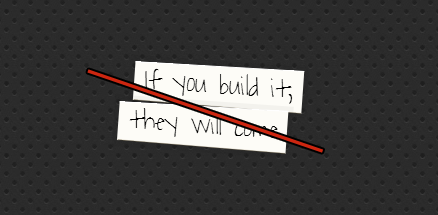
Here is the vital problem with those goals — I had absolutely no idea how to actually achieve any of that. I was taking the field of dreams approach. Write them and they will come.
I had also entered the land of unfair comparisons. At the time all my entrepreneur friends were at least a decade ahead of me. They had established businesses with established clientele. To some degree they had it easier. They could set goals that they actually had a good chance of achieving.
In contrast, I was still trying to figure out who I was and how to take that to the market. I had no idea if I should call myself a “coach” or a “consultant”. I had absolutely no idea how to prospect for new business. After I was sitting in front of a prospect, my closing skills were mediocre at best.
All this sums to a fantastic beat-my-head-on-the-wall experience when it comes to achieving the goals I had set for growing my business.
How I broke the cycle of false starts
The key that really started turning things around for me was simple persistence. I just didn’t give up.
Much easier said than done.
When I first started I didn’t know much about selling my speaking engagements. I started small where I knew I could be successful. Most of my friends suggested pitching my presentations to local Rotary groups as they seem to be in constant need of speakers.
I was able to land several of these gigs with a couple emails and a few phone calls each.
My confidence started to increase.
Then I tackled paying gigs by reaching out to local community colleges. Again, I found success here.
My confidence increased even more.
Now I’m raising the bar again by pursuing gigs that pay even more. This has taken me quite a while to build, and my confidence is growing in stages.
One of the many things I cover in my book Finding My Voice is about how often I used to read success books, hoping to find the secret sauce for getting ahead. Turns out most of what I believed then ended up being success myths.
This is the first in a series of articles that I have written on what I have learned on my pursuit for success — the hard lessons that have stood the test over the past dozen or so years.
Here I separate the success myths from the real deal.
While the formulas offered in most success books just don’t seem to work for me, these are the lessons that do. I can count on them, and I hope they offer some value to you.
Success Myth 1 – Setting goals works all the time
In Does Goal Setting Really Work? I talk about my frustration of setting goal after goal for years on end only to see most of them turn to sawdust. I talk about where goal setting works and where it doesn’t.
Success Myth 2 – Just stay motivated; it’s easy
My article What Really is Motivation? talks about my recent discovery of a single diagram that explained everything. In 30 seconds I could finally see why I kept getting stuck in the cycle of false starts, why I kept pulling up short all the time, and why I was failing to reach my goals.
Success Myth 3 – Plan your work and work your plan
How Does God Factor Into Your Success? is where I touch on the critical aspect of faith in our pursuit of reaching our goals. Here I wrestle with the age-old question: Does God really care if I am successful?
Bonus – 1 Fast way to bounce back after a setback
Reboot is where I talk about one exercise I do to keep myself in productive head-space. This skill is a must for entrepreneurs who experience setbacks on a daily basis.
What may surprise you is:
That there are times when goal setting just isn’t going to work for you.
Why all the tips and techniques out there are more like mental junk food that can rot your brain, and why you need to “brush” daily.
When God thinks of you, your being an outrageous success isn’t the first thing on His mind.
Jason Owens is a speaker with something to say. In uncertain times Jason offers some solutions in compelling ways that both hold the audience’s attention and offer hope for success. His presentation to our team was outstanding. We are still talking about it. Book him as soon as possible.
-JOE PHILLIPS
Chief Evangelist
Joe Phillips Ministries
We recently had Jason Owens to speak at Cullasaja Assembly of God, in Franklin, N.C. in our Sunday night service. We commend him to you as a sincere and dedicated Christian businessman.
– FOREST JONES
Senior Pastor
Cullasaja Assembly of God, Franklin, NC
Jason’s presentation to the Kannapolis Business Alliance group was interesting and engaging. Our members walked away with thoughtful perspectives on the psychology of business ownership. Jason clearly shows his passion and professionalism in his work.
– IRENE SACKS
City of Kannapolis
I left the presentation with a very positive outlook and confidence that I can reach my goals.
– JEWELL MASSEY
Prayer Team Leader
Joe Phillips Ministries
Jason’s business coaching has been invaluable! Through his consultative coaching-style, he has been able to help me identify a niche in my industry and help set clear, achievable goals. Without his help, there is no way I could have achieved a personal income record last year. Thanks again Jason!
– CHRIS KENNEDY
Owner of Kennedy Business Solutions
What a great conversation …last night, Jason is great! Thank you for asking him to speak”, is just one of the many comments echoed after yesterday’s workshop.
A very strange thing happened to me while I was in college in the early 90’s — my faith in God awakened.
I haven’t time to tell you that full story, but I will let you in on a very important person who played a critical role.
His name is Rich Mullins.
If Christianity had an anti-establishment movement, Rich would have been the poster child.
I was very new to the idea of “living by faith”, and Rich’s approach to money was like nothing I had ever seen.
He lived on a paltry salary that he paid himself from his concerts, and donated the rest to charity.
I was fortunate enough to attend one of his shows at the Cincinnati Zoo (I believe WAKW brought him to town), and he encouraged everyone to adopt an orphan from World Vision which had several booths set up around the perimeter.
His music and his life story meant so much to me that his CDs are among the very few things that I could ever part with.
Up till a few days ago I had no idea there was going to be a movie about him. I can’t express with words how happy I am to hear this.
For me, Christmas came early this year. Our God is an Awesome God.