In the quest for a fulfilling career or a successful business venture, the tools we choose can make all the difference.
Let's pause and consider—are you employing the right approach for your job search, or are you inadvertently using the wrong set of tools?
Imagine you're facing a car breakdown. This is a clear-cut technical problem: the starter is broken, and you need someone with auto repair expertise to fix it.
The problem is defined, the solution is clear, and the right person for the job is available.
This scenario exemplifies what we call a technical problem, where solutions are straightforward and typically executed by experts.
However, not all problems fit this mold. Enter the adaptive challenge—a type much more elusive and complex.
An adaptive challenge lacks a clear definition or a simple solution. It demands collective effort and creativity from everyone involved.
No single expert can fix it; instead, it takes a team working together, adapting, and evolving to address the underlying issues.
Now, reflect on your job search or the journey of starting a new business. How often do we treat these endeavors as technical problems?
We assume, "I want this job, so I'll tweak my resume and polish my LinkedIn profile." These are technical fixes, but they might not address the real challenge.
The deeper question asks: Who are you becoming in this job search or business journey? Perhaps the real transformation lies in the adaptive challenge—requiring you to learn, grow, or change certain behaviors.
This challenge demands a deeper understanding of yourself and the process.
We often overlook the adaptive nature of these challenges. It's not just about applying a quick fix; it's about adapting and evolving.
This might mean learning new skills, embracing change, or even facing personal growth. These transformations are as crucial as the job search itself.
Numerous resources can guide you through understanding and tackling adaptive challenges versus technical problems.
As we contemplate our professional paths, I encourage you to ask yourself: Are you attempting technical fixes for a complex, adaptive problem in your job search?
It's time to shift focus and embrace the complexity of adaptive challenges. This approach can yield personal growth and more fulfilling outcomes, far beyond what a simple technical fix can offer.
So, as you embark on your journey, whether it's a job search or starting a business, remember to adapt, evolve, and grow. After all, it might just be the start of a transformational journey you never anticipated.
The world of work is changing faster than ever before, and with change comes opportunity. Careers are no longer static paths that stretch neatly from entry-level to retirement. Instead, they are dynamic, evolving journeys shaped by new technologies, shifting industries, and unexpected opportunities. While this pace can feel disorienting, it also opens doors that earlier generations could never have imagined.
A driving force in this transformation is the rising use of AI automation. What began as tools to streamline repetitive tasks has quickly expanded into powerful systems that can assist with writing, research, data analysis, and even customer engagement. Far from eliminating the need for people, these technologies invite us to step into new roles—roles that emphasize creativity, leadership, problem-solving, and uniquely human insight. In many cases, AI clears away the routine work so individuals can focus on projects that are more meaningful and impactful.
And it’s not just technology creating new horizons. Global connectivity, emerging markets, and even lifestyle shifts are reshaping what “career” means. Remote work, once a rare perk, is now a viable long-term option for millions. Gig work and portfolio careers allow people to combine multiple streams of income and interests. Entrepreneurship is no longer confined to a small elite; tools and platforms make it possible for nearly anyone with an idea to launch a venture. What once looked like instability now looks increasingly like flexibility.
Of course, these changes come with their share of surprises. Layoffs, mergers, and industry pivots can still jolt us off course. Yet within each of these transitions lies a chance to reinvent, to step onto a different path, or to discover strengths we hadn’t been asked to use before. Improvisational adaptability—the ability to respond with creativity and confidence when the unexpected happens—is what turns these moments from setbacks into springboards.
Improvisation, in this context, doesn’t mean “making it up as you go” in a reckless sense. It means cultivating the skill of noticing new options, reimagining old problems, and moving forward without waiting for perfect clarity. It is the mindset of the entrepreneur who shifts strategy midstream, the professional who reframes their story during a career change, and the leader who rallies a team when plans collapse. This is not guesswork; it is a skill that can be learned, practiced, and sharpened.
The truth is, we are all improvisers already. Anyone who has navigated a difficult conversation, adapted to a sudden change in schedule, or found a creative workaround for a problem at work has tapped into this ability. The difference is that some have learned to trust and develop it, while others overlook it. As the landscape of work continues to evolve, the individuals who embrace improvisation as a core life skill will find themselves not just surviving change, but thriving in it.
This white paper begins with a simple premise: the future of work belongs to the adaptable. Traditional career advice—résumés, applications, networking—still has its place, but it only addresses the surface. Beneath the mechanics lies something more powerful: the mindset and skillset of improvisation. By cultivating this capacity, professionals can face disruption with resilience, seize unexpected opportunities, and create fulfilling pathways that might never appear on a traditional career ladder.
Uncertainty may be the new normal, but so is possibility. The skills we need are not about clinging to the past but stepping confidently into the future. Improvisation is the bridge between what was and what could be. Those who learn to walk it with courage and creativity will not only adapt to change—they will redefine what success looks like.
Section 2: Why Traditional Career Advice Falls Short
For decades, conventional wisdom around career transitions has focused on a predictable set of tools: polish your résumé, update your LinkedIn profile, attend networking events, and apply for as many jobs as possible. While these practices aren’t useless, they reflect a world of work that no longer exists. In an age defined by speed, technology, and constant change, relying exclusively on these tactics is like using a paper map in a city where the streets are redrawn every week.
The first limitation of traditional career advice is that it tends to be reactive. A layoff occurs, a role is eliminated, or an industry contracts, and the immediate response is to “dust off the résumé.” This backward-looking document emphasizes what you’ve already done, but it does little to prepare you for what’s ahead. It may help you compete for yesterday’s opportunities, but it rarely points you toward tomorrow’s possibilities.
A second shortfall lies in the uniformity of the advice. Everyone is told to follow the same steps: one-page résumé, customized cover letter, targeted networking. The problem is that when everyone is playing the same game, differentiation becomes nearly impossible. Recruiters and hiring managers are overwhelmed with applications that look and sound alike. What actually captures attention is the ability to tell a fresh story, to bring creativity to problem-solving, and to show adaptability in the face of change.
Another issue is that traditional advice tends to overemphasize the formal job market. The reality is that many of today’s opportunities aren’t found on job boards. They emerge through side projects, entrepreneurial ventures, collaborations, and even chance conversations. Some of the most exciting roles are created when someone spots a need and positions themselves to meet it—long before an HR department drafts a job description. In this environment, the person who can improvise—who can see possibilities outside the posted listings—is far more likely to carve out meaningful opportunities.
It’s also worth noting how traditional methods often ignore the human side of disruption. Losing a role, or even choosing to leave one, brings with it a flood of emotions: uncertainty, fear, self-doubt, and sometimes even shame. Conventional advice jumps straight into tactics—“fix your résumé, sharpen your elevator pitch”—without addressing the deeper need to reframe identity and rebuild confidence. Yet these are precisely the areas where improvisational skills shine.
Finally, traditional career advice assumes a relatively stable environment. It was built for an era when industries evolved slowly, when roles were consistent, and when career paths followed a ladder-like progression. That world is gone. Today, industries transform rapidly under the influence of technology, globalization, and shifting consumer preferences. Entirely new professions emerge while others vanish. Preparing for a single next step is no longer sufficient; what’s needed is the ability to navigate multiple pivots across a lifetime of work. Improvisation, not static planning, is what equips people for this fluid reality.
None of this means résumés, LinkedIn profiles, or networking should be abandoned. They are still useful tools—but they are insufficient on their own. Think of them as the outer layer: the visible mechanics of a career transition. The deeper layer—the one that sustains people through uncertainty—is improvisational adaptability. It’s the skill that enables you to tell your story with confidence, to recognize emerging opportunities, and to reinvent your path without waiting for someone else to define it for you.
This is why a new conversation is needed. The focus must shift from “How do I package myself for the next job posting?” to “How do I develop the skills to adapt, create, and thrive no matter what comes next?” Traditional advice answers the first question; improvisation answers the second.
By understanding the limits of the old playbook, we clear space for something more relevant, more empowering, and more future-proof.
Section 3: Improvisation as a Core Career Skill
When most people hear the word “improvisation,” they picture a comedian on stage or a jazz musician riffing without sheet music. In reality, improvisation is far broader—and far more practical. At its core, improvisation is the ability to respond to the unexpected with creativity, clarity, and confidence. It is about taking the resources you have, in the moment you are in, and using them to move forward.
This is not just a performance art skill; it is a life skill. In fact, research in organizational psychology increasingly shows that adaptability is one of the top predictors of professional success. In a world where industries shift rapidly and roles evolve overnight, the people who thrive are those who can improvise. Improvisation, then, is not a quirky talent for a select few—it is an essential competency for anyone navigating the modern world of work.
Improvisation is often misunderstood as “winging it” or “making it up as you go.” That view misses the discipline behind it. Skilled improvisers aren’t reckless; they are attentive, flexible, and resourceful. They notice subtle cues, listen actively, and build on whatever is happening rather than resisting it. Improvisation doesn’t eliminate planning—it complements it. Plans provide a framework; improvisation provides the agility to adjust when reality doesn’t follow the script.
This skill is valuable in countless professional contexts:
A project manager facing last-minute client changes.
A team leader adapting when a key employee resigns.
An entrepreneur pivoting after a product launch underperforms.
A mid-career professional navigating industry disruption.
In each case, the ability to improvise can be the difference between spiraling into frustration and discovering a new path forward.
The rising use of AI automation is just one example of why improvisation has moved from “nice to have” to “non-negotiable.” As routine tasks are increasingly handled by machines, the uniquely human contributions—creativity, empathy, collaboration, judgment—become more valuable. But these contributions rarely follow a predictable script. They emerge when people respond dynamically to real-time challenges. In other words, the value of human work is shifting toward improvisational capacity.
Unlike technical skills, which can expire as industries evolve, improvisational skills are transferable across contexts. The ability to stay calm under pressure, to reframe problems, and to find opportunity in disruption applies equally to a software developer, a teacher, a nurse, or a business owner. These are not niche competencies—they are universal.
The good news is that improvisation is not an inborn trait—it is a trainable discipline. Improv theaters and business schools alike have demonstrated that simple exercises can sharpen skills like adaptability, listening, and reframing. Each of these practices reinforces the mindset that change is not an interruption but an invitation.
Ultimately, improvisation is less about crisis management and more about opportunity management. It is the skill that allows someone to step into uncertainty with curiosity rather than fear. It empowers professionals to treat career disruption not as an end point but as a transition point. And it ensures that as industries evolve, individuals evolve with them—not by clinging to rigid plans, but by learning how to create in real time.
Section 4: The Deepwater Method – Four Skills for Sudden Change
Improvisation sounds inspiring in theory, but what does it look like in practice? How can a professional, faced with the shock of a layoff or the challenge of shifting industries, actually apply improvisation in the moment? To answer this, we need more than abstract encouragement—we need a framework.
The Deepwater Method highlights four skills that anyone can practice and apply when careers, industries, or personal circumstances take an unexpected turn: Reframing Narratives, Opportunity Scanning, Micro-Experimentation, and Resilient Presence.
Reframing Narratives means telling the story of your disruption in a way that highlights strengths instead of only loss. For example, instead of saying, “I was laid off because the company merged and they didn’t need me,” someone might reframe it as, “I worked through a corporate merger and gained firsthand experience in how companies restructure. I understand both the business pressures and the human impact of those decisions.” That’s not “spin”—because spin collapses the moment pressure mounts. Improvisational reframing is different: it acknowledges hard reality while extracting transferable skills. When money is tight and options feel thin, this skill helps you present yourself with confidence and clarity.
Opportunity Scanning is about widening your field of vision. When disruption hits, the instinct is to narrow your search to “replacing what I lost.” Improvisation teaches you to ask, “What else does this open up?” A teacher may discover instructional design. A corporate manager may uncover consulting work. By scanning adjacent spaces, opportunities emerge that rigid plans might never reveal.
Micro-Experimentation emphasizes action without overcommitment. Instead of staking everything on a single, untested plan, you try small steps—a pilot project, a contract, a volunteer role. Each experiment offers feedback, reduces risk, and keeps momentum moving forward. It transforms “I don’t know what to do” into “I know the next small step.”
Resilient Presence is the anchor. Disruption naturally provokes anxiety about the future. Improvisational presence means focusing on what’s in front of you instead of spiraling into fear. It’s cultivated through habits—reflection, supportive relationships, faith, mindfulness—that allow you to show up grounded in each moment.
Taken together, these four skills don’t just help people endure disruption—they help them turn it into usable momentum.
Section 5: Case Studies and Stories
Frameworks are useful, but they come alive when applied to real people.
Angela, a mid-career sales manager, reframed her layoff story during a merger. Instead of seeing herself as “replaced,” she positioned herself as someone who understood sales leadership during transition. That led her into consulting roles she had never considered before.
Marcus, a tech entrepreneur, launched an app that failed. Instead of pouring more money into it, he ran small experiments with his existing users. He discovered demand for financial coaching and pivoted into a new business that grew steadily.
Dana, a teacher who resigned due to burnout, scanned for opportunities beyond education. She reframed her skills as “learning and development” and tested the waters with volunteer workshops. That experiment led to a corporate instructional design role that reignited her energy.
Paul, a mechanic sidelined by a health issue, stayed resilient and present by documenting his repair skills on video. A small experiment became a YouTube following, which turned into an unexpected new income stream.
These stories are not about avoiding hardship—they’re about using improvisational skills to transform hardship into new direction. They prove the Deepwater Method works in real life.
Section 6: Practical Exercises – Building Improvisational Skills
Improvisation strengthens through practice. Here are three simple drills anyone can start today:
“Yes, And…” Practice: Accept an idea and add to it, instead of shutting it down. Builds openness and collaboration.
Narrative Reframing Drill: Write down a setback, then rewrite the story to emphasize resilience and transferable skills. This isn’t spin—it’s about finding truth you can use.
Micro-Experiment Challenge: Design one small, one-week experiment toward a new interest or career direction. Ask: What did I learn? What’s next?
These are not gimmicks—they’re warm-ups for your adaptability muscle. Practiced regularly, they build habits that make improvisation second nature.
Section 7: From Disruption to Direction
Improvisation is not about patching holes; it’s about building bridges. Disruption will come—that much is certain. But disruption does not have to mean derailment. With the right skills, moments of uncertainty become turning points.
The Deepwater Method provides a way to move from reactive survival to proactive creation. By reframing narratives, scanning for opportunities, running small experiments, and staying resiliently present, individuals can redirect their energy toward meaningful, sustainable paths. What feels like an ending can instead be the start of a new chapter—sometimes one that’s more fulfilling than the path left behind.
Improvisation allows people to navigate disruption with a sense of agency. Instead of waiting for clarity to appear, they learn to move forward step by step, building direction as they go. This is not about settling for less—it is about discovering new forms of success.
Section 8: Conclusion and Call to Action
The future of work belongs to the adaptable. Traditional career strategies alone are no longer enough. Improvisational skill has emerged as a core life skill—one that allows people to thrive in uncertainty, create opportunities, and redefine success on their own terms.
This paper has introduced a framework, shared real-world stories, and offered practical exercises. But reading is only the first step. True growth comes from practice and application.
If you or your organization are navigating disruption, I invite you to explore this further. Whether through workshops, speaking engagements, or collaborative programs, I help individuals and teams build improvisational skills that turn change into opportunity.
Uncertainty may be unavoidable, but how we respond is a choice. With improvisation as a life skill, we can choose resilience, creativity, and forward motion.
I want to encourage you today with this quick thought exercise that could radically shift where you are spending your time and how much revenue you are producing.
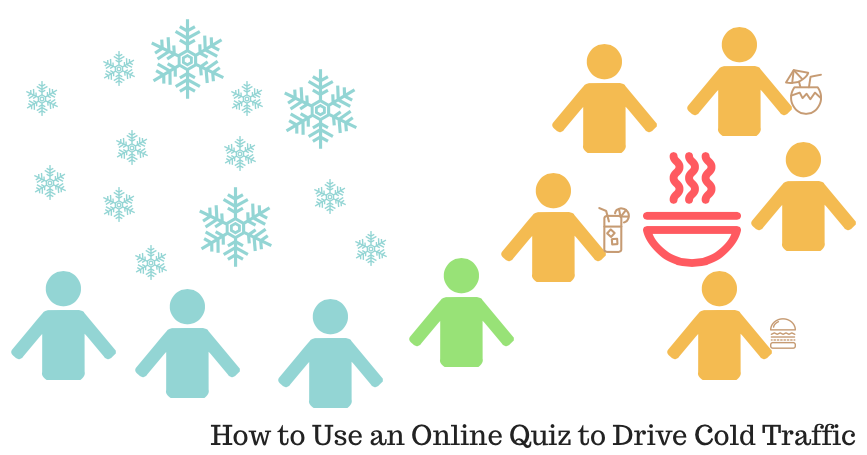
I found a new way to bring a fresh pool of cold traffic to my site and, most importantly, to my Facebook Pixel.
If you have spent any time on Facebook in the last 12 months you have undoubtedly seen one of your friends share a post that says “I got Boba Fett. Who will you get?”
One click takes you to an online quiz to help you determine which Star Wars bounty hunter you are.
I did a little digging to find out one of the companies serving these quizzes is Qzzr.
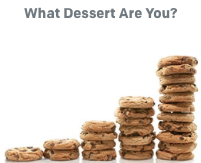
Qzzr Online Quiz Examples
I knew that the viral reach of these quizzes could be significant, so I decided to see for myself just how helpful these online quizzes could be in driving traffic.
I started a free account which gives you access to everything you need to get a quiz started.
My approach at first was to take as little time as possible getting the quiz out to new users, so I did not goldplate this first version.
Here is a screen capture of my rather nondescript entry page for my quiz (check out my quiz here).
I didn’t use any fancy background, because that would have taken extra work to put together (since remedied).
In total my quiz consisted of 5 questions. I wanted something that people could do in less than a minute.
Facebook Ad to Drive Online Quiz Traffic
My Time Investment in the Online Quiz
My total time to…
Design the Quiz
Create the Blog Post where the Quiz resides
Create the Ad Creative for the Facebook Ad
Craft the Ad
…was about 2-1/2 hours.
Did the Online Quiz Really Drive Traffic?
Yes. All things considered I am happy with the traffic driven to my site.
Sure, the price per click was higher than I would have liked.
Sure, I didn’t get near the viral reach I would have liked.
But…people responded!
Why?
A quiz is different.
It is not a blog post, and it is not a podcast.
Here are the numbers
My Facebook ad to 3 different audiences over 24 hours netted 50 ad clicks. I also posted a link to the survey on my FB page, and on my FB profile where the survey received additional traction.
My cost per click (or to use the new term, “Cost Per Pixel”) for the Facebook ad was $1.55. The first day of the campaign saw CPP as low as $0.96.
As you can see below, the quiz was viewed a total of 68 times, and it received a 40% start rate.
Of the people who started, 93% completed the quiz — pretty impressive retention — validating my assertion that keeping the quiz short would help in this stage.
Of the people who completed the quiz, 4% shared it.
Quiz Engagement Funnel Results
Online Quiz -Lessons Learned
1) Online Quizzes Rule!
First take away is that I now LOVE incorporating quizzes as a means of driving (and pixeling) traffic. I will certainly do this again.
2) Silly is Better for Viral Reach
My hunch here is that people didn’t share much because they didn’t like their result.
For example, a number of people received the result that they were like Brené Brown. Maybe this works for you if you are a woman, but I could see some men not wanting to share this result.
If your answer were closer to “You got Purple Elephant”, perhaps this is less challenging to one’s identity, and you would be more willing to share this with your online tribe.
What I Would Do Differently Next Time
1) Better Audience Selection
I am in the process of honing and fine tuning my interest-based audiences, and I believe the lack of a well-defined audience really drove my CPP too high. Ideally, I’d like to see my cost per pixel below $0.75.
2) Use a Cover Image for the Online Quiz
For this first version of the quiz the cover image was a field of turquoise. Certainly does not have the draw of a compelling image with recognizable faces.
3) Better Copywriting on My Ad
My invitation to take the quiz could be more compelling.
4) Test Different Images on Ad Creative
This time I constructed the one ad creative so that it contained both genders. The easiest change I could make here is to create a montage of just women and a second montage of just men. Each could be driven to their respective genders via FB ad targeting criteria.
[reminder]How about you? Have you used online quizzes as a way to drive cold traffic to your site? If so, tell us how it worked out for you.[/reminder]
In Stephen Covey’s Seven Habits book, one of his first lessons is the Golden Goose.
It is an illustration of two concepts — production and production capacity.
Covey uses the Golden Goose analogy to illustrate the balance that we need to strike between our ability to produce and the production itself.
In short, don’t kill yourself. Don’t injure your ability to produce by burning yourself out.
At the start of the year, I knew I had to make several changes to my non-work life, and this podcast tells you:
What I tried
How it is working for me in the first 4 months of the year.
Click the triangle to listen to the podcast.
[smart_track_player url=”http://traffic.libsyn.com/jasonrowens/JOP015.mp3″ artist=”The Jason Owens Podcast” title=”Ep.15 – How to Protect Your Greatest Asset – An Introduction to Noom”]
Our paths have crossed at some time in the past 18 months.
Perhaps we met when…
You attended one of my 2 or 3-hour workshops in NC
You saw me speak at Craft Content Nashville
You purchased my book, Finding My Voice
You purchased a seat at my full-day The Sales Workshop event
We spoke to each other at a networking function
You signed up for a free give away from my blog (JasonROwens.com)
We attended Experts Academy
You saw me speak at one of your Rotary events
No matter when or where we met, 2 things are certain:
We met
I have your email
Why am I Reminding You?
I am going to start writing again which means you’ll be hearing from me more often.
Translation: I’ll probably send out new material once a week.
What I Write About
The Inner Life of Entrepreneurs
Information Marketing
Creating Membership sites
Life Behind the Scenes as I Build my Business
Maintaining your Performance in the Face of Adversity
The Intersection of Faith and Entrepreneurship
Who Am I?
I am Jason Owens.
I research new entrepreneurs, and I speak across the southeast on ways to help more new entrepreneurs succeed.
Please Unsubscribe
If you don’t remember me, or you’ve transitioned away from self-employment, or you don’t want to receive more email from me going forward, then please unsubscribe.
No hard feelings.
If you need to unsubscribe just go to the Unsubscribe link at the bottom of the page.
Discussion
For those of you who are still with me I have one question to pose:
[reminder]What is one thing that you wish you would have known about starting a business? Continue the conversation on facebook, twitter, or linkedin.[/reminder]
Savvy business owners know the power that products have to jumpstart stalled sales efforts, create new relationships, and scale your business like never before.
Nowadays it is so easy to create very high quality information products, a category which includes podcasts, ebooks, hard copy books, online videos, CDs, and DVDs.
Most computers come with just about everything you need to be up and running in full “product creation mode” in no time.
Couple this with a few well-placed freelancers who can help with editing or design, and there is no limit to what you can create. Be aware, however, that there are few subtle nuances that can spell success for failure here.
The Always-Increasing Price of Free
In 2009 you could give away just about anything that was in an ebook. iPads were the new rage, and everyone seemed to have a Kindle.
These new users were hungry for digital content to put on these new tech toys.
Now here we are several years later, and the price of free has changed.
[Tweet “Make it so good that people want to share it!”]
Customers are more sophisticated, and they won’t just give out their email to anyone for a free chapter of your book.
What has changed is that people’s appetite for free has increased like crazy.
To stay relevant you have to provide more and more value — translation: doing more and more stuff for no immediate payoff.
You have to give away so much value that it will cause people to rave about you. I don’t say this lightly, and I know first hand how difficult it can be.
One Man’s Story of Growth
Check out this evolution chain of one podcast for one very notable figure in the expert/guru world.
Started podcasting about 3 years ago. Did it all himself. No intro music. Lots of editing. By his own admission it took him 2-3 days to do one podcast.
Refined his process to remove the time-consuming part of editing and found that no one cared about his missteps on the broadcast.
Added intro music and started having more guests. Refined his process even further to reduce production time to less than one day per podcast.
Today he has a host and moderator, full intro and outro music, and a complete line up of guests, not to mention a sizable following. His podcast is essentially radio broadcast quality.
Granted, not every listener expects this level of sophistication for every newbie. My emphasis here is that this level of growth is available to every one of us!
[Tweet “A phenomenal amount of growth is available to every one of us!”]
Through a consistent stream of high quality content, this man developed a substantial following and several very lucrative revenue streams because he went the path of free and stuck with it.
If you follow a similar path, you can scale your business in no time.
The 3 Golden Rules to make the most of your free products.
Make is Sharable.
Make it actionable.
Hard copy is ok.
Make is Shareable
Sounds basic, but dig beneath the surface here. I don’t mean sharable in that it is possible for you to share it. Instead I mean make it so good that people want to share it.
Rule of Thumb: If you feel your product is so good that you should charge money for it, then you’ve probably added enough value.
Make it Actionable
This isn’t the time for “high-level overview”.
You can’t afford to be theoretical here. Your readers are going to insist that they be able to put your content into action right now — today.
If you can’t deliver that, you are dead.
Hard copy is ok!
In our world people are too quick to jump to digital versions of our products, but don’t miss the opportunity to go old school on this one.
I can’t tell you how many times people have lent me a book because they were amazed by the authors slant on some issue or technique.
So, don’t be afraid to go old school if you want.
[reminder]What steps can you take right now toward creating a rave-worthy scalable product? Continue the conversation on facebook, twitter, or linkedin.[/reminder]
For those of you who’ve been following me for any length of time, you’ll know that I started publishing a lot more in the month of March.
This is the first of two articles I’m going to publish about my new content creation process.
In this article I’m going to share with you the secret to how I’m doing it.
In the next article I’m going to tell you the benefits I received from increasing the amount of times I’m publishing.
Delegation (Once Again) is King
I’m not a bad writer. In fact, I really enjoy writing.
The thing that was most difficult for me to realize is that while I might be good at writing a blog article, I’m not the best in the world.
I need to delegate the things that I’m good at doing so I can concentrate on what I’m best at doing.
This is where Alexandria Powell enters the scene. Together we have found a way for her to focus on her unique ability — writing, so that I can concentrate on my unique ability.
This simple act of delegation has completely changed the way that I view my content creation process here with my company.
A Look at my Editorial Calendar
You can see in the following image I have set a target to publish three times per week.
I want to have one video every Monday sharing something inspirational people can use to get started on the right foot.
On Wednesdays and Fridays I want to publish text content in the form of blog articles.
In the past I was publishing perhaps one or two blog articles per month.
Now, I’m publishing eight blog articles per month, and four videos per month.
If I didn’t have the following two workflows set up, there is no way I would be able to churn out this much activity on my blog.
The Secret Ingredient
You might be jumping ahead with the thought that I just hired someone to write all my articles.
The problem with the expert industry is that most often the expertise, the very thing people will come to us to hear, exists only in our heads. Content creation is not easily outsourced!
[shareable cite=”Jason R Owens” text=”Content creation is not easily outsourced! Here’s the next best thing.”]Content creation is not easily outsourced![/shareable]
Until we get to the days where we can sit down into a matrix-style chair and have somebody download our brains, it will remain very difficult for us to find ways to scale content creation.
Meet Alexandria Powell, the person who almost single-handedly has transformed my content creation process.
As you’ll see in the upcoming workflows, we found a way to download information from my brain and put it into my blog.
Once we tackled this step, content creation began to flow like water.
For those of you who are experts, public speakers, workshop leaders, and published authors, I highly recommend you contact Alexandria to set up this exact same workflow in your business.
My Workflow for Video Creation
I employ our time-tested technique called block scheduling. I usually shoot all of my videos on a Saturday morning.
In a few hours I’m able to create and upload all of my videos for the month, yet the blog posts that announce those videos still remain outstanding.
Here is the workflow for creating 4 video posts to show on each Monday:
Jason – Records videos on iPhone (time: ~ 30 minutes)
Jason – Edits and trims the video on iPhone (time: ~8 minutes)
Jason – Uploads the video to YouTube (time: ~ 30 minutes)
Jason – Sends video ID, headline, and publish date to Alexandria (time: 20 minutes)
Alexandria – Creates and schedules 4 video posts (one for each Monday in the month)
At the end of this workflow each of the videos I have hosted on YouTube are scheduled to be released on a given Monday morning for each week of the month.
[shareable cite=”Jason R Owens”]Block scheduling your content creation is key to success.[/shareable]
Likewise there is a corresponding blog post that announces this video to all of my blog readers. These are also scheduled and ready to go for every Monday morning for the month.
At this point I have maybe 2 to 2.5 hours into the entire process of capturing the idea, jotting a few notes on the flow of each video, shooting and uploading all four videos, and sending over all of the descriptive text to Alexandria so she can publish the corresponding blog posts.
My Workflow for Blog Creation
As a precursor to this workflow, I usually use a tool called Evernote to capture all of my blog article ideas. I like Evernote because it is available not only on my desktop, but my laptop, too.
It’s also available on my phone, so I have Evernote with me everywhere I go. I usually use Evernote to make a very quick notation as to what the blog article would be about.
Once I have chosen the ideas I’m going to use for a given month, here are the steps I follow to turn these ideas into blog articles:
Jason – Uses voice dictation on a word processing app on my phone (the Pages app on my iPhone) to create a first draft of the blog article. (time: ~7-10 minutes)
Jason – Sends article to my Content Manager, Alexandria.
Alexandria – Enters a more polished version of the article, chooses a featured image to capture the theme of the article, sets up any tweetable quotes inside the article itself, and schedules the article for publication.
As a rule of thumb it takes me about 20 minutes from capturing the idea, jotting a few quick notes for an outline and then creating the first draft for each regular blog post.
If I have to create any additional images or include screen capture images, like I had to do for this post, that will add another 15-20 minutes depending on the level of detail.
Total Time
In all I am probably putting in about 6 hours of work per month to create 4 short videos and 8 blog posts.
Again, I can’t stress how important it is to find someone who can help you do the very things you are not world class at doing. This has completely transformed my content creation process here at my company and I have a feeling it could greatly help yours as well.
[shareable cite=”Jason R. Owens” text=”Find somebody who can help you do what you aren’t best at doing!”]Find somebody who can help you do things you aren’t world class at doing so you can focus on what you do best![/shareable]
[reminder]What are some tips you have found helpful in creating content for your expert business?[/reminder]
After a very difficult period in her life, Laura Diehl woke in the middle of the night, her head filled with the title for a book and pages upon pages of notes.
Only a short time later this late-night epiphany has grown to several published books, a series of conferences, and her first-ever virtual summit.
Click the triangle to listen to the podcast to learn how she did it.
[smart_track_player url=”http://traffic.libsyn.com/jasonrowens/JOP013.mp3″ artist=”The Jason Owens Podcast” title=”Ep.13 – 2 Ways You Can Benefit From a Virtual Summit – An Interview with Laura Diehl”]
Hope and Healing Virtual Summit for Grieving Parents (You should click through to see how many people Laura recruited for this event. The number really is impressive!
Laura saw an increase of about 200 subscribers from running her virtual summit
Solidifying Your Expertise
Become even more of an expert in the eyes of other experts in your field, b) your prospects.
Other experts in your field
Your prospects
What Is Working Right Now
I noticed that the blog posts in Laura’s blog often have what I’m calling a “Double Call-to-Action” where she has an after-post opt-in form above a second call to action for her speaking skills.
Laura says, “That [after-post opt-in form] has been our most consistent way of adding to our email list…”
Click the triangle on the green bar to listen now.
[smart_track_player url=”http://traffic.libsyn.com/jasonrowens/JOP013.mp3″ artist=”The Jason Owens Podcast” title=”Ep.13 – 2 Ways You Can Benefit From a Virtual Summit – An Interview with Laura Diehl”]
Welcome to my brand new podcast specifically devoted to helping authors and public speakers harness the power of content marketing.
I have packed this inaugural episode full of content that you can use to build your business right away.
Click the green bar to start listening.
[smart_track_player url=”http://traffic.libsyn.com/jasonrowens/JOP001.mp3″ artist=”The Jason Owens Podcast” title=”Ep.1 – Kickoff and Case Study on List Building via Text/SMS”]
Show Notes
In this inaugural episode you will hear:
What you can expect from this podcast as a listener.
A case study on list building using SMS/Text which is working right now.
[smart_track_player url=”http://traffic.libsyn.com/jasonrowens/JOP001.mp3″ artist=”The Jason Owens Podcast” title=”Ep.1 – Kickoff and Case Study on List Building via Text/SMS”]




![015: How to Protect Your Greatest Asset [Podcast]](https://jasonrowens.com/wp-content/uploads/2017/04/Jason-Owens-Podcast-Episode-15-Protect-Your-Greatest-Asset-My-Time-with-Noom-Featured-Image.png)




![013: 2 Ways You Can Benefit From a Virtual Summit [Podcast]](https://jasonrowens.com/wp-content/uploads/2017/04/Jason-Owens-Podcast-Episode-13-Laura-Diehl-of-GPS-Hope-Featured-Image.jpg)

![001: How to Build Your List While On Stage [Podcast]](https://jasonrowens.com/wp-content/uploads/2025/07/The-Jason-Owens-Podcast-Ep-1-Kickoff-Case-Study-on-List-Building.jpg)