From the outside we can watch someone land a big sale, come up with a new product that people love, and even create partnerships that seems to take off into the stratosphere.
All the while we watch them with stupor and envy over how they seemed to do it all without straining.
I recently picked up a copy of The Talent Code from my local Barnes & Noble. While I plan on doing a pretty thorough review on The Talent Code at a later time, I wanted today to focus on one concept -- a key concept -- that can unlock the path to your true talent.
I'm completely enthralled with deep practice.
Daniel Coyle's superb writing and excellent research skills have landed us a rare glimpse into what it is like to develop our talent to a level of sheer mastery.
Deep practice is one of those keys. Sure, we have to have a good teacher. And we have to be passionate about what we're doing. Consider these as foundations to your motivation.
Once we are motivated and have found a love for our craft, the manner in which we approach practice is a clear delineator between those whose path continues upward and those whose path grows stagnant.
[Tweet "Deep practice sets you free to be the entrepreneur you were created to be. @JasonROwens"]
What Is Deep Practice?
The author provides us with this definition.
...struggling in certain targeted ways--operating at the edges of your ability, where you make mistakes--makes you smarter. Or to put it a slightly different way, experiences where you are forced to slow down, make errors and correct them--as you would if you were walking up an ice covered hill, slipping and stumbling as you go--end up making you swift and graceful without your realizing it (p.18).
It is painful. It comes in fits and starts. For musicians it means playing a few notes and then starting over. Then playing a few more notes, getting further, and then stopping again to go back and look at the music.
For some athletes deep practice also looks like concentrated high speed practice like playing indoor soccer on something as small as a basketball court. The game moves fast. Players learn to improvise which is every bit as important as knowing basic ball handling skills.
Take a look here a this image of a student in the midst of deep practice. She is given a word problem (bottom of image) and tasked with finding the answer. Looks like 3 failed attempts before she gets on the right track.
The student starts, sets up the problem, and then gives it a try. She can tell she's on the worng track, so she starts over. She sets up the problem again and realizes she's on a dead end a second time. A third try ends in another wrong answer.
The fourth try is the one that finally produces the right answer.
You can see the teacher's praise for the student's effort.
Why is Deep Practice Important to New Entrepreneurs?
This is the part that I think so many people miss.
You are not going to do well on your first venture just like you are going to do well when you are first learning to play a song on an instrument or learning to play your first sport.
These things take time.
Sure, at some level we all know this, but we all think that this applies to someone else.
The problem is that most of us don't have time.
We don't have unlimited resources either.We have to make hay while the sun is shining. We have to start making money.
[Tweet "What do I need to remove from my days so that I have more time for deep practice? @JasonROwens"]
Where Do You Need to Use Deep Practice in Your Life?
You must be really good at your core activity--the thing you do, the widget you produce, or the service you perform.
Without displaying some level of proficiency here, nothing else matters because you won't have a business.
The second answer is that you need deep practice at promoting your business. This doesn't mean selling your product by going door-to-door. It means that you should be able to find a mix of 2-3 activities that consistently introduce you to people who could be in the market for your product either in the short term or over the long term.
This mix of 2-3 activities should have a track record of producing consistent revenue for you.
This track record does not have to be picture perfect. We aren't looking for perfection. We are looking for something that has worked at least once and gives you some degree of energy for doing it again.
Once you've landed on these 2-3 activities, your path is golden. Lather, rinse, repeat.
Learn more and more from each time you reach out, talk about your sevices, and offer your goods.
Give yourself large blocks of time for both the activity, and then do the most important thing. Take a few minutes to make notes on what worked and what didn't.
Without this, you won't get any benefit from practicing. All you are doing is just going out and falling off your bike. You have to understand what worked and what didn't work. If your instrument sounds off-key, go back and look at the sheet music.
And then try again.
[reminder]In what one or two areas should you begin deep practice to ensure that you build a level of genius into your work?[/reminder]
For new business owners nothing is more critical than cash-flow which keeps you on the constant lookout for sales you can make today.
Yet one of the most important things you can do as a new entrepreneur is to make the decision to build a following in your early days.
Sure, there are people who will do business with you right now because they
Came to your booth
Met you at an event
Really need / want what you offer
But there is a much larger group of people that most business owners completely overlook.
People who will eventually do business with you if you stay in touch
Let’s call this pool “Eventual Customers”.
These people are like fruit that will ripen in just a little while, they need just a little more time on the windowsill.
The business owners who win over the long term are the ones who
Recognize the need to nurture these Eventual Customers.
Do the nurturing that needs to be done.
Why Building a Following Can Be So Hard
What can make this so hard is the continual hunt for customers who want to buy today. If you have set up your entire business around the quick hit, the sale where you happen to be in the right place at the right time, then you’ll most likely miss the value in building a following for future sales.
I’m thinking about one entrepreneur I interviewed earlier. She was the perfect picture of an entrepreneur who was after the quick-hit sale. Her business-to-business day consisted of having at least 10 conversations per day with business owners to get them to sign up for her service.
No interest? No problem. “I’ll be back in this area in 6 months.”
It took some time, but she eventually saw the value in longer-term relationships.
She now openly embraces the Eventual Customers mindset, and has seen huge returns on nurturing followers over the long-term.
How to Get Started
One of the simplest things to do is to just start collecting people’s information. It is easy enough to do. All you have to do is ask. See Lisa McShane’s example here.
If you have a booth-based business, then buy a mini clipboard (see this 6″x9″ one from Staples or just Google “mini clipboard”) and place a small sign up sheet. Consider providing a freebie (promotional pen, example of your work, etc.) for signing up.
Make it a habit of exchanging cards. Yes, this means that you will need to get your own cards printed. See Vistaprint for free cards just to get started.
What This Isn’t
Keep in mind here that you are NOT obligating yourself to starting a website, building a blog or starting some huge social media campaign.
Some business owners make the mistake of investing too heavily in ongoing nurturing. Some feel the need to update their followers every day. For some businesses this can reach overkill quickly.
Building a following is different than building a list, but could certainly lead to that in the future.
What To Do Next
Instead just think about reaching out to people once a month with a short email that says
Here is what I did last month
Here are a few of my products / services that are selling well (get yours now)
Here is what I’m looking forward to next month
You are probably looking at a whopping 10 minutes to write your email, and you’ll become the top of people’s mind.
Here’s a hypothetical example from my training world.
Last week I was in Raleigh, NC with a class of entrepreneurs.

We had a blast figuring out new ways to take our products to market.

My Sales Workshop classes are my biggest seller,
and I can't wait to see you in one of my sessions as I travel
around the state.  Next month I'll be in Columbia, SC
teaching my newest class The Inner Roadmap to aspiring entrepreneurs.

In the mean time, if you have any questions about getting
your business started, just hit Reply and I'll do
everything I can to help.

Talk to you soon,
Jason
Feel free to tailor that to your business.
From here you can grow this practice in any one of a thousand ways — a monthly newsletter, a featured-product-of-the-week email, you name it.
Have fun building your following. This is one of the most productive long-term investments you can make in your business.
[reminder]Was this Article Helpful? Please leave me a comment below.[/reminder]
In this part of the country that much snow means trouble.
All we can do at this point is weather the storm.
Which means a lot of sitting.
And waiting.
There are plenty of other things I could be doing today. Productive things. Work-related things.
While my only choice is to dial down my angst, part of me secretly loves times like these. Times where my plans get interrupted; times when all I can’t go 90 miles an hour.
When I stop moving for too long, I really start to take stock of my life.
This been such a rescue for me in the past. These sitting and waiting times have saved me from continuing down a road I shouldn’t have been on. A wrong turn that I was trying to solve by going faster.
I imagine you’ve had times like this too. Times when you were…
traveling for work, and get stuck in a massive delay at the airport.
waiting for a tow truck to pull you out of a ditch.
stuck in the waiting room of the quick-change oil change place that has had your car for over an hour.
These are great opportunities for reflection, and sometimes I suspect that God arranges moments like these to slow us down, to get us out of our usual frenzied pace.
Then, and perhaps only then, do we ask ourselves the most dangerous question we will ever ask ourselves:
What am I doing here?
The reason this question is so dangerous is because the answer has the potential to up end our lives. Daring to ask that question could lead us to all sorts of other wild places such as the desires of our heart, and how we could have abandoned them so long ago.
If we ask that dangerous question we could also start to think about our calling, and if there even is such a thing as having a purpose, and if so, how we can find it.
And then we begin to realize that yes, there is such a thing as a calling. We begin to see people living from their purpose, and we begin to want that in our own lives as well. We forgive ourselves for taking the wrong turns, we forgive ourselves for our former misplaced priorities. We begin to see our way out of the fog.
The next time you find that life has hit your pause button, and you are not going to catch the flight, or get your car back, or do anything that was on your list for that day, take a few minutes… no…take an hour to sit with this question: “What am I doing here?”
If you stay with it, I promise you, answering that question will lead you on more adventures that you can possibly imagine.
[feature_box style=”12″ only_advanced=”There are no title options for the choosen style” alignment=”center”]
When I let my wife proofread this article, she said I needed to follow it up with some practical how-to behind my suggestion. So, here it is…
This exercise is designed to get you thinking about where you are and where you want to be in your life.
Let's get started right away.
Take a few moments to write down in as much detail as possible where you are in your work life.
What job do you hold?
Who do you work with?
What responsibilities do you have?
How do you feel about your job?
If you were to be layed off tomorrow, how would you feel deep down?
The first set of questions is designed to get us to simply open our eyes. We must first take a hard and objective look at where we are. Where things are good, we have to admit them and celebrate them. Where things are not so good. We have to admit that.
This isn't to say that we have to fix all the bad things about our situation because some of them just are not fixable.
This is simply taking stock of our situation.
Where Do You Want to Be?
Likewise, let's do the same exercise on the other end of the spectrum.
Where would you like to be with respect to your work life?
What job would you hold?
Who would you work with?
Who would you like to be serving?
What kind(s) of work would you rather be doing?
Is your work related to a cause (i.e., clean drinking water for the under privileged)? If so, what draws you to this cause?
If you have a clear picture of work you would like to do, what are your next most logical steps?
If you need to get more clarity, what could you do to get a deeper understanding?
The second set of questions is designed to get us thinking in terms of possibilities, to paint our respective worlds anew with a magic brush. Given what we know about ourselves, where would we go from here?
Most of the time there is a huge difference between where we are and where we want to be. This is completely normal. You can begin taking steps toward a better future today. Want to learn more?
[optin_box style="2" alignment="center" email_field="inf_field_Email" email_default="Your best email address" email_order="1" integration_type="infusionsoft" double_optin="Y" list="95" name_field="inf_field_FirstName" name_default="Your first name" name_order="0" action_page="https://ab158.infusionsoft.com/app/form/process/efd5dfba7ad105a0afaa0f4d4dc01dd4"][optin_box_hidden][/optin_box_hidden][optin_box_field name="headline"]Get Closer to Your Calling[/optin_box_field][optin_box_field name="paragraph"]PHA+RlJFRSB3ZWVrbHkgbGVhcm5pbmcgbW9kdWxlcyBkZWxpdmVyZWQgdG8geW91IHN0YXJ0aW5nIHdlZWsgb2YgRmViIDIxLjwvcD4K[/optin_box_field][optin_box_field name="privacy"]We value your privacy and would never spam you[/optin_box_field][optin_box_field name="top_color"]undefined[/optin_box_field][optin_box_button type="0" button_below="Y"]Sign Me Up![/optin_box_button] [/optin_box]
Does God Play a Role?
There is a third set of questions that I will introduce here to get you thinking about what role, if any, that God plays in your work-related pursuits.
Do you feel God's calling or wanting to speak with you regarding the current path you are on?
Do you have a sense that the place you are in is requiring you to be someone that you weren't really made to be?
Do you feel there is something else, some other path that God may be calling you to pursue?
Is the concept of hearing from God outside of your norm, or have you embraced this notion before?
How to Get a Plan
When I was first struggling between where I was and where I wanted to be, I had no idea what steps to take next.
It took me a lot of trial and error, but I finally found my way.
Is there such a thing as a person having a calling? I wrestled with this for a very long time. What is the difference between my just wanting to do pursue a profession and my being called to it?
Right out of college I became an engineer. I love technology. I like taking things apart. I like figuring out how things work, and seeing if I can make them perform better.
Here I am years later and I realize that the themes of technology (in the form of using technical tools and solid research methods), taking things apart and figuring out how to improve them have never left me.
Nowadays, though, I don't take apart expensive machinery or industrial computers. Instead, I'm more interested in how people function, how we can find work that really matters to us. I like seeing people perform "better" in terms of seeing them with a higher quality of life.
Was I really called to be an engineer? If so, did I forsake that calling when I left formal engineering years ago?
My approach here usually follows a pretty straight forward path:
I see a job or a role that looks pretty exciting, and seems like it would be fun.
I search every last opening I can find in an attempt to land the opportunity.
I get the deal, dive in, and have fun.
This was pretty much my approach for years.
Types of Calling
I do believe that people can be called to certain professions, but I don't believe that is the only way that calling works. There are perhaps dozens of ways that people can be internally compelled toward a course in their lives. Some of which include a calling to:
Specific geographies - the Serengeti
Particular groups of people - the underprivileged
A cause - clean drinking water, micro loans
Using a certain set of skills - ZZZZZZZ
For me, I see myself falling in the latter category as I really enjoy applying my curiosity, my drive, my enthusiasm for good work, my technical bent, all of it in the name of making something or some process better for everyone. You see, I think the idea of being called to an occupation just doesn't fit me because I could be happy in a wide range of jobs as long as I feel I am able to use my skills.
Not too long ago I had a contract position with a very large Fortune 500 company. I was happier in that job than I was in all the time I had been self-employed up to that point. I was so content in that role because I was using many of the same gifts and talents I listed above.
I was working with technology and people. I was able to learn what made this particular process work for the clients, and I was able to help them do something better and faster than before. You see? These are many of the same skills I loved using when I was an engineer.
The Spiritual Side of Calling
If you look at the first set of bullet points above I describe a rather me-focused approach my landing a job that I wanted. I want to bring this up again so I can contrast it with a very different type of calling.
Let's call the first type of calling "I want" calling. I'm in the driver's seat. I'm calling the shots.
The second type of calling I will call "I respond" calling, as in "This is being requested of me, so I'm responding". Someone or something else is in the driver's seat. There is a sense of serving the greater good. This second type of calling usually, but not always, involves more altruistic endeavors such as:
Teaching
Social work
Nursing
Animal care
Child care
Military service
The fundamental shift here from "I want" calling and "I respond" calling is that there is an internal desire being driven from some other source than money, ego, greed, or power.
The listener has somehow developed the capacity to hear what others are not wired internally to hear.
A very important sub-category of "I respond" calling involves when a person believes he or she is hearing from God.
The Call of the Wild Goose
I have been told that celtic christians used to use the term "the wild goose" when they referred to being on a mission from God (This is a far cry from our modern term, "wild goose chase").
I will call this third type of calling "Invitation".
Here, not only does the person have a sense of hearing, so to speak, but she also believes that God is the one doing the talking.
This is not limited to people who become pastors, missionaries, or who work for large para-church organizations. It
Every one of us striving for a better future will hit a point that deeply tests our resolve.
Life has currents that push against our dreams.
And these currents cause us to doubt ourselves, to doubt if we have anything to offer.
Stuck with the painful indecision that lies somewhere between uncertainty and lack of clarity, we find ourselves waffling. Making gains one day only to hit a setback the next.
You have to forget how unreasonable your dream is. You have to give yourself permission to be irrational.
You discover talent hidden deep within when you push into the place where you feel you should have given up long ago.
This is where you discover your greatness.
So, go down the rabbit hole. Chase those dreams of yours. Yes, you will look crazy. And someone, or many someones will try to talk you out of it.
And you may even fail.
But you have to go “all in”. You have to unpack for us everything you have to give.
Some people get their dreams handed to them.
For the rest of us, there comes a time when you have to fight for it.
I like to read a chapter or so just before going to sleep. Usually I read a book with spiritual content, and listen to hear if God has something to say to me.
Lately I have been wrestling with the snail’s pace that certain areas of my life seem to be moving. I have a tremendous desire to just get on with it, to press forward so I can see some results.
I go back to God quite often to check in, to see if I’m still on the right path. I often do this checking by reading the works of others to see if something resonates with me.
A paragraph that I read last night is one that I have probably read a dozen times, but this time it jumped out to me. It was so profound that the book itself might as well have spoken audibly.
And so the first command comes first. God tells us to love him with all our hearts and all our souls, all our minds and all our strength. It’s not a burden but a rescue, a trail out of the jungles of desire. When we don’t look for God as our true life, our desire for him spills over into our other desires, giving them an ultimacy and urgency they were never intended to bear. We become desperate, grasping and arranging and worrying over all kinds of things, and once we get them, they end up ruling us. It’s the difference between wants and needs. All we truly need is God. Prone to wander from him, we finally need all sorts of other things. Our desire becomes insatiable because we’ve taken our longing for the Infinite and placed upon finite things. God saves us from the whole mimetic mess by turning our hearts back to him.
– John Eldredge, Desire, (2007) pg 176.
Of course! How many times have I heard the verse “Delight yourself in the LORD, and he will give you the desires of your heart” (Psalm 37:4, ESV)? Probably well over a hundred.
It sounds so good doesn’t it? Like one of those promises you see on a desktop calendar. The problem is that I just never found it true for me. Sure, I think God is great and all, but I don’t see Him giving me “the desires of my heart.”
I had to come to grips with one brutal fact: I had entered God into a popularity contest. Yes, God is great in my life, but when it comes to the matters of the heart, can I really say that God is first in my life?
Deep down I really just want to rely on myself and my drive to get through all the tough spots. I don’t really want to throw myself at anyone’s feet to ask for help.
But this is precisely the crux of the issue. It really is about our recognizing that we are dependent upon Him.
What never hit me until I read this paragraph last night was that once we decide that God really is all we need in life, once He has the place as the true head of our lives, only then is it safe for God to give us the desires of our heart.
If He gave us our desires without His having the proper place in our lives, then our career or our children or our hobbies could begin to own us.
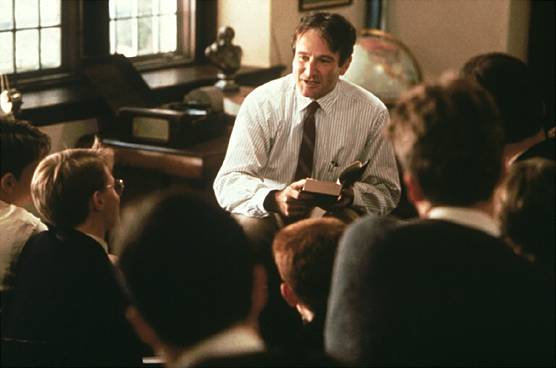
In the late 80’s Robin Williams starred in a brilliant movie titled, Dead Poets Society.
The movie was almost solely responsible for reviving the phrase Carpe Diem (Seize the Day). In a brilliant scene early in the movie, Williams, portraying teacher John Keating, takes his class into the hallway for a brief lesson on the importance of life.
He leads them to the trophy case where each boy from this elite preparatory school stares blankly at fading black and white photos from athletes in their glory days, trophies from long-ago victories sit tarnished behind glass. Keating implores the boys…
They’re not that different from you, are they? Same haircuts. Full of hormones, just like you. Invincible, just like you feel. The world is their oyster. They believe they’re destined for great things, just like many of you, their eyes are full of hope, just like you. Did they wait until it was too late to make from their lives even one iota of what they were capable? Because, you see gentlemen, these boys are now fertilizing daffodils. But if you listen real close, you can hear them whisper their legacy to you. Go on, lean in. Listen, you hear it? – – Carpe – – hear it? – – Carpe, carpe diem, seize the day boys, make your lives extraordinary.
That scene itself is enough to make a person drop everything and go climb a mountain. It is the best of feel-good moments. And here, my friends, is where we need to have our heads clear on one very important thing.
It is just one moment.
You may have started down a new path full of excitement, ready to make things happen. Then, some months or years into it, you find that everything has just gone…sideways. Maybe it is your health. Your aging parents. Your adult children. A situation at work.
We will need more than just one moment to sustain us.
A more sustainable way to seize the day
As we stand in our own hallway, looking at an empty trophy case were our dreams should be, a pithy one-liner from a desktop calendar just won’t make everything better. The best movie in the world will only last us a few hours.
In my 20’s, my orientation was all about filling my trophy case with a good job and an important title. Sure, I was able to put my share of achievements in the case, but as I moved through my 30’s, God upended all that. It was my personal Great Purge.
In my early 40’s I regained my composure.
[callout]”Seize the day” is now replaced with “living well”.[/callout]
I’m realizing now that my motivation isn’t coming from what I think I can become, or from a fear of not reaching my potential.
My motivation now comes from the contributions I can make, using the gifts I have been given, for the people God sends me.
It is not so much an all-out push to seize the day as it is an intentional seeking of living well inside my design. I am completely free to be who I am which frees me from acting like someone I’m not. No more striving.
The Great Purge, as miserable as it was, gave me far more resolution than I could have ever gained through a book or some “developmental assignment” at work.
What better thing can you do for your career, your sanity and for your family than to live from the design you were given, walking step by step with the One who designed you?
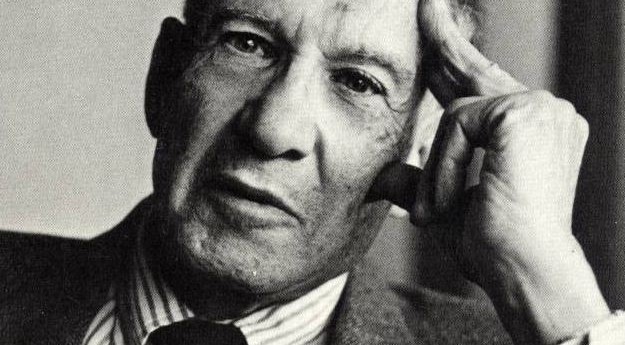
I want retire like Peter Drucker. He is one of the most accomplished thought-leaders of the 21st century, but it isn’t his career that I find so inspiring.
It is the longevity of his contributions.
Born in 1909 Drucker would have been eligible for traditional “retirement” by, say, 1975 (granted, he immigrated to the US and became a naturalized citizen in 1943, so I’m not certain how this would have affected the timing of his eligibility).
Now go to his wikipedia entry and scroll towards the bottom where you will find the Books By Drucker section. Look at all of his publications after 1975.
Staggering, isn’t it?
Just scroll and look for every date past 1975, and you will start to get a picture of what we are all capable of doing after the traditional age of “retirement”.
Consider that Drucker was still teaching in his early 90’s!
An Older View of Retirement
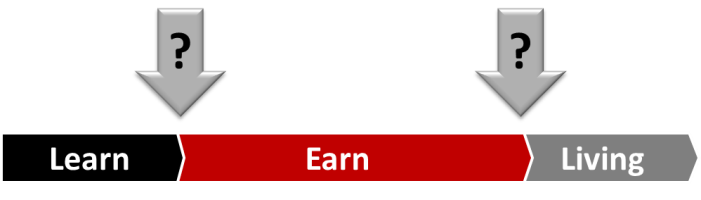
Take a look at this diagram that I found; it describes exactly how I looked at life up till a few years ago.
Allegedly, Learning happens up to some point in our lives, and then we enter a very long period of Earning. We do these Earning activities up to some time when we start Living, presumably during retirement.
The sad truth is that most of us agree with the diagram. The responsible part of us says, “That’s just the way things are.”
However, the reality depicted in this image probably died sometime in the late 80’s to early 90’s.
The key to retire now is finding work you love. Find something that you can throw yourself into for the next 20 years (even if you are in your 70’s).
When you find work you love, you find life! (Tweet that)
I have no plans to retire — ever.
If you have paid the price to find work you really enjoy, then why would you want to escape from it? As long as you are physically and mentally able why wouldn’t you continue doing great work?
While I was a financial advisor I came face-to-face with many retirees who really enjoyed their first 18 to 24 months (this article claims only 10 months) of doing all the things they wanted to do — visit the grandkids, golf, hike, what ever — then…invariably the restlessness set in.
“I realized that I still have plenty to give, plenty of energy, and a lifetime of experience. I couldn’t just sit at home any more.” This and phrases just like it were so common from new retirees. Many became involved in volunteering.
I disagree with the diagram I showed you earlier. My own life isn’t one straight line that moves from Learning to Earning to Living. I do all 3 at the same time. I love my work.
Take time to find work you love, and then do it for the rest of your life. (Tweet that)
Contribute well into your 90’s. Be like Peter Drucker.